Description
The matrix in the solid phase provides great strength and toughness over a wide range of conditions. The microstructure is face-centred cubic in structure. It can be conveniently used from cryogenic temperatures to temperatures as high as 1100°C retaining its mechanical properties. The chemical composition also contributes to its exceptional corrosion resistance.
- Nickel exceptionally resists chemical environments and various corrosion conditions.
- Chromium with the help of a protective oxide layer provides general corrosion resistance.
- Molybdenum gives localized corrosion resistance such as pitting and crevice corrosion.
- Columbium stabilizes the heat affected zones during processes, thus restricting inter-granular corrosion at grain boundaries.
Hence, the combination of these elements provide resistance to a wide range of corrosion environments even under oxidizing and carburizing conditions. The versatility of the alloy under various conditions enables the grade to be used in chemical processing applications having different pressures and temperatures. The alloy can also exceptionally resist chloride stress corrosion cracking. It also has great fatigue resistance, which makes it suitable to be used in dynamic applications. Applications involving thinner sections can use this alloy efficiently since it provides the required strength along with corrosion resistance and thermal properties. Also, the ease of fabrication helps the grade to be machined into required sections.
The alloy is compliant to be designed in high acceptable strength even at elevated temperatures. Annealing in the grade gives the alloy a very fine grain structure to be used up to 820°C, keeping its tensile and fatigue strength intact. The excellent ductility of the metal along with its impact strength gives the alloy freedom to be used in varied applications.
The impact strength of the grade is significantly retained even at cryogenic temperatures. At 30°C, the strength is about 70J, at -80°C the strength is about 60J, and at -200°C, the strength is about 45J. The grade might show some hardening during intermediate temperatures but with prolonged heating, carbide precipitation can be avoided at carbide-rich phases. Hot working, as well as forging, can be conveniently carried out under proper conditions – it is ideally performed around 980-1180°C. Hot working needs to be followed by annealing around the lower temperature range to obtain the fine grain structure. Cold working can also be done on the grade, however, since the grade tends to work harden, immense care needs to be taken. For intricate components, cold working needs to be done with intermediate annealing.
Chemical Properties
CHEMICAL PROPERTIES
| Grade | Ni | C | Co | Mn | Si | Cr | S | Al | Fe | P | Nb Ta | Mo | Tl | |
| Inconel 625 | Min. | 58.00 | – | – | – | – | 20.00 | – | – | – | – | 3.15 | 8.00 | – |
| Max. | – | 0.10 | 1.00 | 0.50 | 0.50 | 23.00 | 0.015 | 1.70 | 5.00 | 0.015 | 4.15 | 10.00 | 0.40 |
Physical Properties
| Density | 8.44 g/cm 3 / 0.305 lb/in 3 |
| Melting Point | 1290 -1350 (°C) / 2350 – 2460 (°F) |
| Specific Heat @ 70°F | 0.102 BTU/lb-°F (32 – 212°F) 427 J/kg-°C (0 –100°C) |
| Thermal Conductivity @ 70°F | 75 BTU-in/ ft2-h-°F 10.8 W/m-°C |
| Young’s modulus (n/mm2) | 205 x 10 |
| Electrical Resistivity @ 70°F | 50.8 Microhm-in at 70°F 128.9 Microhm-cm at 21°C |
| Curie temperature | -190 (°C) / < -320 (°F) |
| Permeability at 200 oersted (15.9 ka/m) | 1.0006 |
| Annealing | 871 (°C) / 1600 (°F) |
| Quench | Rapid Air / Water |
General Data
| Standard | Inconel 625 |
| UNS | N06625 |
| WERKSTOFF NR. | 2.4856 |
| EN | NiCr22Mo9Nb |
| BS | NA 21 |
| GOST | ХН75МБТЮ |
| JIS | NCF 625 |
| AFNOR | NC22DNB4M |
| OR | ЭИ602 |
Standards Specifications
PIPES & TUBES
| Summary | Standards |
| Standard Specification for Nickel-Chromium-Molybdenum-Columbium Alloys (UNS N06625 and UNS N06852) and Nickel-Chromium-Molybdenum-Silicon Alloy (UNS N06219) Pipe and Tube | ASTM B444 |
| Standard Specification for Welded UNS N06625, UNS N06219 and UNS N08825 Alloy Tubes | ASTM B704 |
| Standard Specification for Nickel-Alloy (UNS N06625, N06219 and N08825) Welded Pipe | ASTM B705 |
| Standard Specification for Electric Fusion Welded Nickel and Nickel Alloy Pipe | ASTM B474 |
FITTINGS & FLANGES
| Summary | Standards |
| Standard Specification for Factory-Made Wrought Nickel and Nickel Alloy Fittings | ASTM B366 |
| Standard Specification for Nickel Alloy Forgings | ASTM B564 |
Forms of Supply
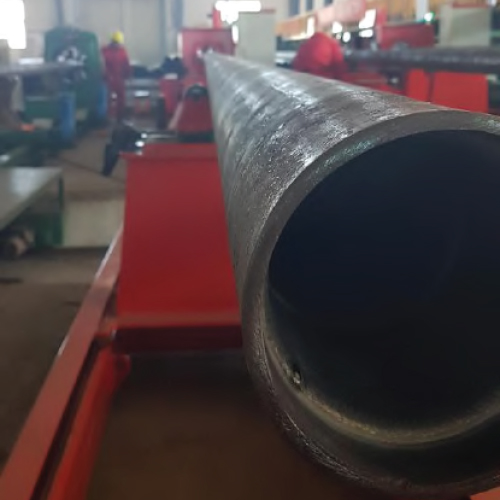
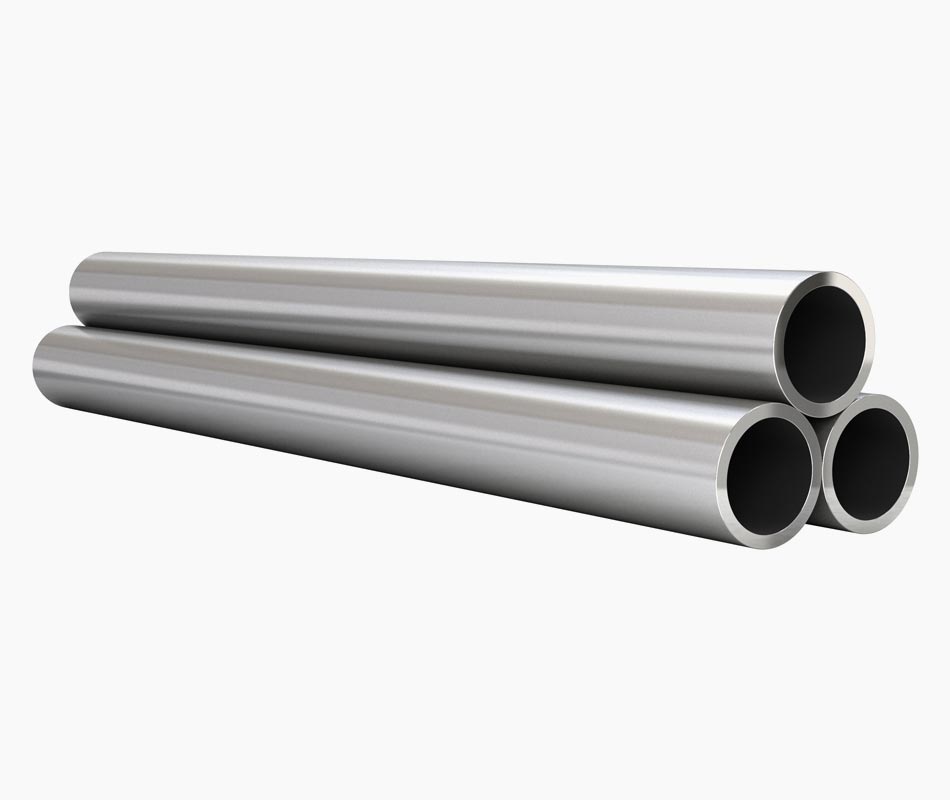
Piping and tubing, fittings and flanges, washers.
Corrosion Resistance
The grade has impressive resistance to general corrosion as well as corrosion in various conditions. It can perform suitably well in and out of water. A significant resistance to oxidation and varying stress conditions at high temperatures is provided. The high alloy content makes it possible for the alloy to be used under severe conditions. The alloy also has better aqueous corrosion resistance than most of the alloys. When tested for chloride stress corrosion resistance against grade 316, the alloy 625 resists the attack up to much higher temperatures. The alloy can resist acidic and moderately reducing environments. Even in flue gas desulphurization environments, the grade performs better than grade 316 and grade C276.
Heat Treatment
The alloy is considerably heat treated according to its service temperature and creep rupture properties as required. The standard anneal is performed at 870°C for service temperature of the alloy up to 650°C. The alloy obtains fine grain structure and ductility with optimum creep rupture properties. To acquire a higher service temperature with better creep rupture properties, a solution anneal needs to be performed at 1100°C. The high solution anneal creates the required softness and the alloy could be used for processing applications like cold rolling. The time and temperature should be decided according to the thickness of the given section.
Weldability
The alloy can be conveniently welded with conventional techniques like TIG, MIG, PLASMA, SMAW, and SAW. The surface should be cleaned and oxides removed before welding, preferably in mill-annealed condition. Filler metal is selected to obtain maximum corrosion resistance, high strength, and uniformity. Pre-heat and post-heat welding is normally not required.
Machining
The alloy has similar machining characteristics as austenitic stainless steels with slightly higher strength. They comparatively work harden faster and larger forces are required to deform them during cold working. If cold working is excessive, intermediate annealing might be required. Positive feeds, proper depth of cut, slow speeds, rigid and sharp tooling, and powerful machinery should be used.
Applications
Jet engine exhaust systems, Chemical process equipment, Flue gas desulfurization scrubbers, Weld Overlay, Engine thrust-reverser systems, Aircraft ducting systems, seawater equipment, Evaporators for wet-process phosphoric acid containing H2SO4, HF and ferric salts, Turbine shroud rings, Bellows and expansion joints, Nuclear water reaction components.
Possible grade alternatives
INCONEL 600
| Grade | Ni | C | Cr | Mn | Si | CU | Fe | S | |
| Inconol 600 | Min. | 72 | – | 14.0 | – | – | – | 6.0 | – |
| Max. | – | 0.15 | 17.0 | 1.00 | 0.50 | 0.50 | 10.0 | 0.015 |