Description
Nickel also imparts the required toughness to the metal and restricts corrosion during the processes even under acidic conditions. It also helps in resisting chloride stress corrosion cracking. The copper content improves the machinability of the grade. The nickel-copper-molybdenum conjunction gives the alloy exceptional resistance to reducing environments. In addition to that, there is also titanium stabilization in the alloy which restricts the formation of carbides at the heat affected zone. The inter-granular corrosion attack, particularly after processes at high temperatures and welding, is highly resisted due to the stabilization. The chemical composition of the grade improves the overall working properties of the alloy even at moderately elevated temperatures. The balance in iron and nickel content makes the alloy known as both austenitic alloy as well as a nickel alloy.
The grade has lesser work hardening due to the copper content. It can be therefore used from cryogenic temperatures to slightly high temperatures without loss of mechanical properties. However, other alloys are not considered when creep-rupture properties are required. The alloy 825 is efficiently used up to 540°C, without much changes in its microstructure and ductility. The alloy also has good impact strength which can be suitably retained at cryogenic temperatures. Incoloy 825 can be easily forged to required shape by managing its temperature around 880-1200°C. A finishing forge is carried out around 870°C to ensure better corrosion resistance. Thereafter, stabilizing annealing can be done to give additional strength.
The alloy is furthered strengthened by cold working. The alloy is also easier to cold form than other stainless steels. The decrease in the modulus of elasticity is very less with an increase in the corresponding temperature. At 20°C, the modulus value is around 195 GPa while at 600°C, its value is around 160 GPa. The alloy grade also proves to be effective in terms of cost while providing resistance to almost all variable media.
Chemical Properties
CHEMICAL PROPERTIES
| Grade | Ni | C | Cu | Mn | Si | Cr | Fe | S | Al | Mb | Tl | |
| Inconel 825 | Min. | 38.0 | – | 1.5 | – | – | 19.5 | 22.0 | – | – | 2.5 | 0.6 |
| Max. | 46.0 | 0.05 | 3.0 | 1.0 | 0.50 | 23.5 | – | 0.03 | 0.2 | 3.5 | 1.2 |
Physical Properties
| Density | 8.14 g/cm 3 / 0.294 lb/in 3 |
| Melting Point | 1370 -1400 (°C) / 2500 – 2550 (°F) |
| Specific Heat @ 70°F | 0.105 Btu/lb/°F |
| Curie temperature | < -196 (°C) / < -320 (°F) |
| Annealing | 930 – 983 (°C) / 1700 – 1800 (°F) |
| Quench | Rapid Air |
| Resistivity(μω.cm) (0-100 C°) | 112 |
| Young modulus E (gpa) (0-100 C°) | 195 |
| Shear modulus G (gpa) (0-100 C°) | 75 |
General Data
| Standard | 825 |
| UNS | N08825 |
| WERKSTOFF NR. | 2.4858 |
| EN | NiCr21Mo |
| BS | NA 16 |
| GOST | XH38BT |
| JIS | NCF 825 |
| AFNOR | NFE30C20DUM |
| OR | ЭП703 |
Standards Specifications
PIPES & TUBES
| Summary | Standards |
| Standard Specification for Seamless Nickel and Nickel Alloy Condenser and Heat-Exchanger Tubes | ASTM B163 |
| Standard Specification for Nickel-Iron-Chromium-Molybdenum-Copper Alloy (UNS N08825 and N08221)* Seamless Pipe and Tube | ASTM B423 |
| Standard Specification for Welded UNS N06625, UNS N06219 and UNS N08825 Alloy Tubes | ASTM B704 |
| Standard Specification for Nickel-Alloy (UNS N06625, N06219 and N08825) Welded Pipe | ASTM B705 |
| Standard Specification for Electric Fusion Welded Nickel and Nickel Alloy Pipe | ASTM B474 |
FITTINGS & FLANGES
| Summary | Standards |
| Standard Specification for Factory-Made Wrought Nickel and Nickel Alloy Fittings | ASTM B366 |
| Standard Specification for Nickel Alloy Forgings | ASTM B564 |
Forms of Supply
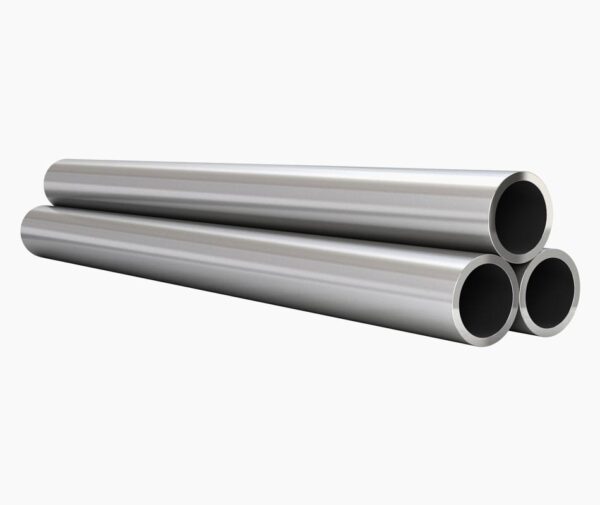
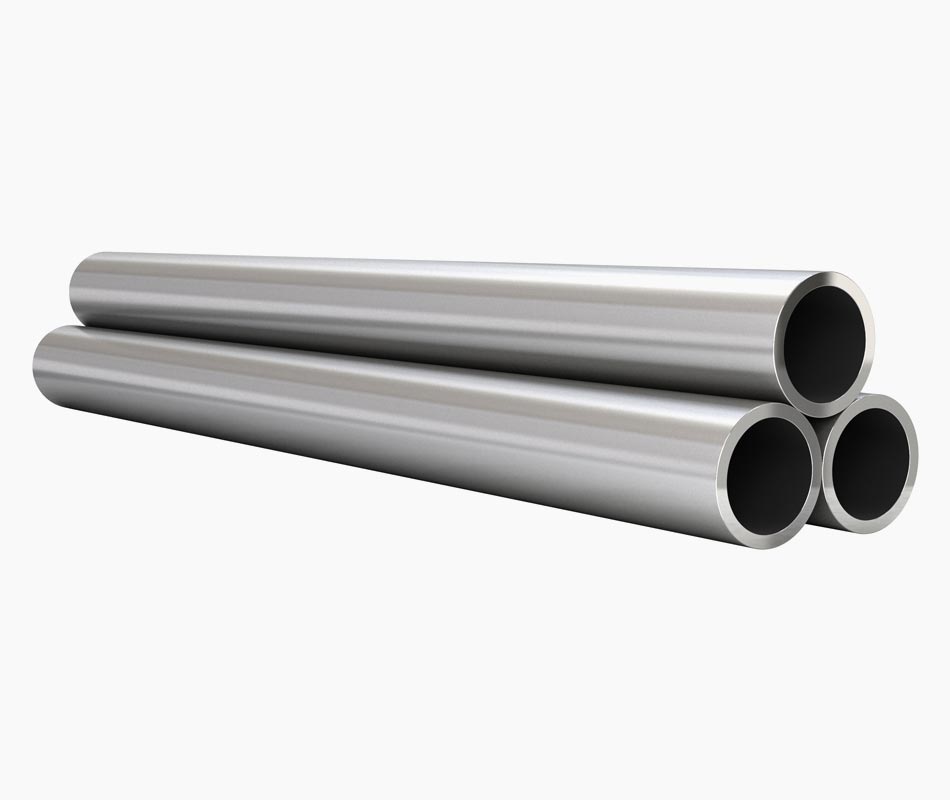
Piping and tubing, fittings and flanges, washers.
Corrosion Resistance
The composition of the alloy is resistant to various forms of corrosion in the most aggressive environments. It can resist oxidizing as well as reducing environments like phosphoric acid and sulphuric acid. It can also resist sulfur-containing flue gas, seawater, and sour gas. The alloy has improved aqueous corrosion resistance than the former grades. The localized corrosion attacks like pitting and crevice corrosion are efficiently resisted. Intergranular corrosion is very well resisted due to the presence of titanium stabilization in the alloy. The nickel content apart from general corrosion restricts chloride stress corrosion cracking. The fine amount of chromium gives resistance under nitric acid and nitrate environments. Resistance to oxidizing salt is also provided.
Heat Treatment
The alloy has titanium in its composition. Annealing can be carried at around 930-990°C. It is carried by rapid cooling to ensure maximum corrosion resistance. The grade is normally a stabilized anneal with a lower range of annealing around 940°C. Annealing is done below the full annealing range to obtain the maximum amount of titanium carbides and to avoid carbide precipitation at grain boundaries. However, softness and better grain structure is obtained by annealing at 980°C and above. Quenching might always not be required for thinner sections but is very important for thicker and larger sections to get rid of the sensitization of carbides.
Weldability
The alloy is conveniently weldable with standard procedures like MIG (metal inert gas), TIG (tungsten inert gas), SMAW (shielded metal arc welding), and SAW (submerged arc welding). INCONEL filler metals are normally used. Joints should be properly cleaned to avoid contamination at the weld.
Machining
The alloy is moderately easy to machine. All the standard techniques can be readily used. It has optimum machining characteristics in the annealed condition. The alloy is specified as a ‘C’ alloy and tooling specifications are relatively used. Positive feeds, rigid tooling, appropriate speeds, and adequate lubrication will provide optimum results.
Applications
Chemical Processing, Acid production, Pickling tank heaters and equipment, Phosphoric acid evaporators, Nuclear fuel reprocessing, Oil and gas well piping, pollution control, Sulphuric acid piping and vessels, Propeller shafts, Tank trucks, Calorifiers, Electrostatic precipitator electrodes, Oil and gas recovery, Radioactive waste handling, Marine exhaust systems, ammonium sulfate vessels, Expansion Bellows, Power station ash hoppers, Hot vessels for food, water and seawater.
Possible grade alternatives
INCOLOY 600
| Grade | Ni | C | Cr | Mn | Si | CU | Fe | S | Al | Ti | |
| Incoloy 600 | Min. | 30.00 | – | 19.00 | – | – | – | 39.50 | – | 0.15 | 0.15 |
| Max. | 35.00 | 0.10 | 23.00 | 1.50 | 1.00 | 0.75 | – | 0.015 | 0.60 | 0.60 |