Description
The microstructure of the grade gives it a good amount of metallurgical stability along with a high amount of surface stability. The ductility of the grade is retained exceptionally. It can endure long service exposure without loss of strength. The alloy also retains its mechanical strength at elevated temperatures. Cyclic heating as well as cyclic cooling on the alloy is resisted. Hence, the alloy has good fatigue strength. The grade can be conveniently used in dynamic applications. Hot working as well as cold working can be suitably done. Cold working can provide the required hardening and it is done with proper tooling. Hot working can be done around 870°C to 1240°C, giving the metal alloy its required shape. After the processes, annealing is indispensable so as to remove the hot worked internal stresses.
Forging to required shape can also be suitably done on the alloy around 1240- 1340°C. Components like gears need to be surface carburized and its heat treatment components need to endure carburization as well as corrosion. The alloy 600 readily resists carburizing environments and hence it is used in respective applications. The alloy’s composition and properties prove extremely fitting for the usage in a wide range of industrial and commercial applications. Its high temperature properties, general resistance to corrosion, behaviour in aggressive environments, and brilliant forming characteristics increase its overall application demand.
Chemical Properties
CHEMICAL PROPERTIES
| Grade | Ni | C | Cr | Mn | Si | Cu | Fe | S | Al | |
| Inconel 601 | Min. | 58.0 | – | 21.00 | – | – | – | 7.685 | – | 1.0 |
| Max. | 63.0 | 0.10 | 25.00 | 1.00 | 0.50 | 1.0 | – | 0.015 | 1.7 |
Physical Properties
| Density | 8.11 g/cm 3 / 0.293 lb/in 3 |
| Melting Point | 1360 – 1411 (°C) / 2480 – 2571 (°F) |
| Specific Heat @ 70°F | 70°F, Btu/lb-°F 0.107 21°C, J/kg-°C 448 |
| Thermal Conductivity @ 70°F | 78 Btu-in/ft²-h-°F / 11.2 W/m-°C |
| Coefficient of expansion | 7.60 70-200°F, 10(-6) in/in-°F | 13.75 20-100°C, æm/m-°C |
| Electrical Resistivity @ 70°F | 620 Microhm-in at 68°F1.03 Microhm-cm at 20°C |
| Curie temperature | < -196 (°C)/ < -320 (°F) |
| Annealing | 1150 °C / 2100 °F |
| Quench | Rapid Air / Water |
General Data
| Standard | 601 |
| UNS | N06601 |
| WERKSTOFF NR. | 2.4851 |
| EN | NiCr23Fe |
| BS | NA 49 |
| GOST | XH60BT |
| JIS | NCF 601 |
| AFNOR | NC23FeA |
| OR | ЭИ868 |
Standards Specifications
PIPES & TUBES
| Summary | Standards |
| Standard Specification for Seamless Nickel and Nickel Alloy Condenser and Heat-Exchanger Tubes | ASTM B163 |
| Standard Specification for Nickel-Chromium-Iron Alloys (UNS N06600, N06601, N06603, N06690, N06693, N06025, N06045, and N06696)* and Nickel-Chromium-Cobalt-Molybdenum Alloy (UNS N06617) Seamless Pipe and Tube | ASTM B167 |
| Standard Specification for Electric Fusion Welded Nickel and Nickel Alloy Pipe | ASTM B474 |
Forms of Supply
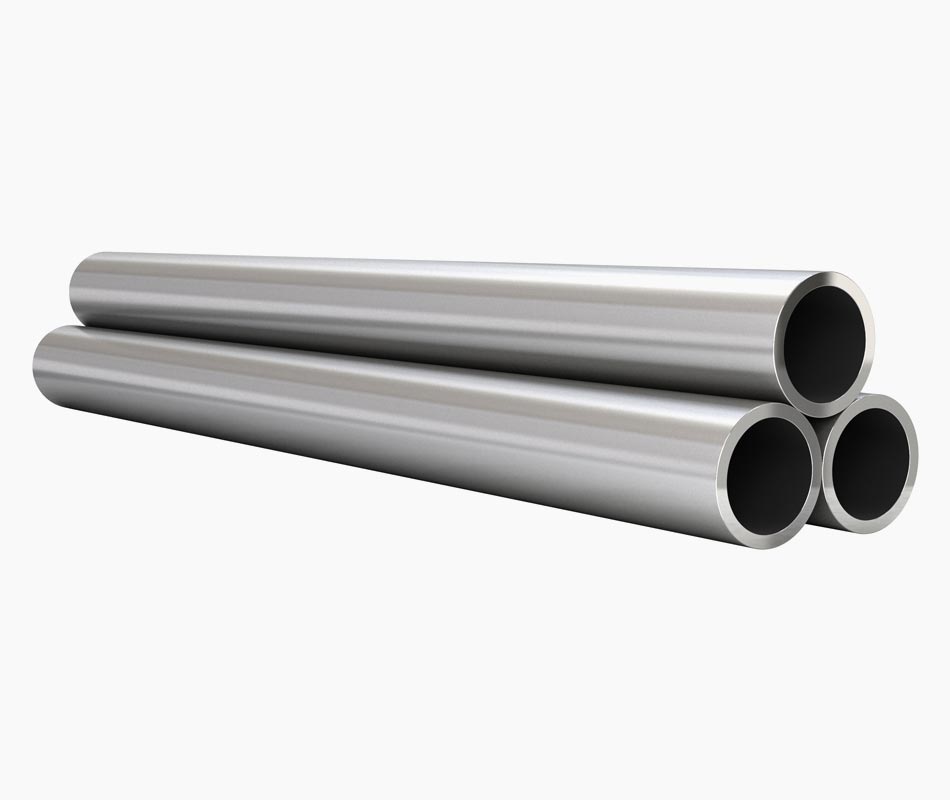
Piping and tubing, fittings and flanges, washers.
Corrosion Resistance
The grade has nickel as its base along with chromium content, which provides brilliant corrosion resistance properties under moderate to aggressive environments. There is also additional aluminium content which helps in resisting oxidation up to 1200°C efficiently. It can also resist carburization effectively. Hence, it will find its uses in a wide range of carburizing atmospheres. It can also resist the carbon nitriding environment. The alloy performs satisfactorily well in the presence of aqueous corrosive media. However, it does not perform very well in the presence of strongly reducing as well as sulphur-present acids.
Heat Treatment
The alloy is normally heat resistant and cannot be hardened by heat treatment. However, cold working can be done to increase the hardening of the alloy. Annealing is done in the grade to refine its grain structure and remove internal stresses. Annealing is normally done around 1150°C. It is soaked appropriately throughout the sections with a given time-to-temperature requirement. Cooling is done in the range of 540- 750°C in order to avoid thermal cracking.
Weldability
The alloy is readily weldable using general techniques. Normally used methods are gas tungsten arc welding, shielded metal arc welding, gas metal arc welding, submerged arc welding, etc. The metallurgical stability of the grade gives it its fine welding properties.
Machining
The nickel grade can be suitably machined using techniques similar to ferritic alloys. Tooling needs to be rigid and speedy as required. Carbide tools are suggested. Lubricants and coolants are selected accordingly. High-speed operations can be done by water-based coolants. Precise operations might require heavy lubricants while commercial lubricants can be used for general machining operations.
Applications
Heat treating muffles and retorts, Steam super-heater tube supports, Catalyst support grids in nitric acid production, Heat treating industry, gas turbine components, radiant tubes, power generation, aerospace, chemical processing, combustor components, condenser tubes, petrochemical and process equipment, industrial furnaces, Tube supports and ashtrays in the power generation industry, Insulating cans in ammonia reformers, Refractory anchors, strand annealing, high-velocity gas burners, wire mesh belts.
Possible grade alternatives
ALLOY 625
| Grade | Ni | C | Tl | Mn | Si | Al | Cr | S | P | Nb Ta | Co | Mo | Fe | |
| Inconel 625 | Min. | 58.00 | – | – | – | – | – | 20.00 | – | – | 3.15 | – | 8.00 | – |
| Max. | – | 0.10 | 0.40 | 0.50 | 0.50 | 1.70 | 23.00 | 0.015 | 0.015 | 4.15 | 1.00 | 10.00 | 5.00 |