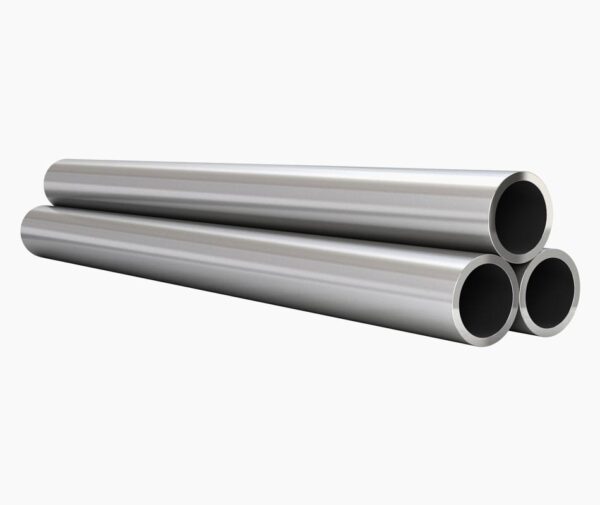
Description
A whole range of chemicals are resisted by this grade. It efficiently resists sulphurous, formic, acetic, tartaric acids, and chloride environments. Hence it can be used in wide range of chemical processing equipment and environment.
With the chemical composition including chromium, nickel and molybdenum, the grade shows better resistance to pitting and crevice corrosion to various media. Hot working, as well as cold working, can be suitably done on the metal, at convenient temperatures. All hot working procedures can be appropriately done on the metal including forging. The working temperatures need to be carried out between 1150- 1250°C, without letting it fall below 950°C. Quenching needs to be rapid since slow cooling might embrittle the metal. Annealing might be required to retain its corrosion resistance properties. A full range of cold working operations can be carried out on the grade. The grade has fine ductility and forming characteristics.
It has suitable nitrogen content so that it can be work-hardened stronger and faster. Cold working increases its strength as well as hardness. Processes like heading, bending and drawing can be carried out. The grade also efficiently provides high creep resistance for it to work under thermal cyclic loads, and high tensile strength even at elevated temperatures. The grade also has a high melting point of about 1400°C and can be suitably used at elevated temperatures.
Chemical Properties
| Grade | Ni | C | Cr | Mn | Si | P | Mo | S | Fe | |
| 317 | Min. | 11.0 | – | 18.0 | – | – | 0 | 3.00 | – | 57.845 |
| Max. | 15.0 | 0.08 | 20.0 | 2.00 | 1.00 | 0.045 | 4.00 | 0.030 | – | |
| 317L | Min. | 11.0 | – | 18.0 | – | – | – | 3.00 | – | 57.89 |
| Max. | 15.0 | 0.035 | 20.0 | 2.00 | 1.00 | 0.045 | 4.00 | 0.030 |
Physical Properties
| Density | 0.285 lbs / in3 7.89 g /cm3 |
| Melting Point | 2540 – 2630°F 1390 – 1440°C |
| Specific Heat | 0.12 BTU/lb-°F (32 – 212°F) 502 J/kg-°K (0 – 100°C) |
| Thermal Conductivity @ 212°F | 8.7 BTU/hr/ ft2/ft/°F 1.26 W/m-°K |
| Elastic Modulus | 29.0 x 10⁶ psi 200 GPa |
| Electrical Resistivity | 33.5 Microhm-in at 68°F 85.1 Microhm-cm at 20°C |
| Annealing | 1010-1121°C (1850-2050°F) |
| Poisson Ratio | 0.27-0.30 |
General Data
| Standard | 317 | 317L |
| UNS | S31700 | S31703 |
| WERKSTOFF NR. | – | – |
| EN | – | – |
| BS | – | – |
| Swedish | – | – |
| JIS | – | – |
Standards Specifications
PIPES & TUBES
| Summary | Standards |
| Standard Specification for Seamless Ferritic and Austenitic Alloy-Steel Boiler, Superheater, and Heat-Exchanger Tubes | ASTM A213 |
| Standard Specification for Welded Austenitic Steel Boiler, Superheater, Heat-Exchanger, and Condenser Tubes | ASTM A249 |
| Standard Specification for Seamless and Welded Austenitic Stainless Steel Tubing for General Service | ASTM A269 |
| Standard Specification for Seamless, Welded, and Heavily Cold Worked Austenitic Stainless Steel Pipes | ASTM A312 |
| Standard Specification for Electric-Fusion-Welded Austenitic Chromium-Nickel Stainless Steel Pipe for High-Temperature Service and General Applications | ASTM A358 |
| Standard Specification for Welded Large Diameter Austenitic Steel Pipe for Corrosive or High-Temperature Service | ASTM A409 |
| Standard Specification For Seamless Stainless Steel Mechanical Tubing | ASTM A511 |
FITTINGS & FLANGES
| Summary | Standards |
| Standard Specification for Wrought Austenitic Stainless Steel Piping Fittings | ASTM A403 |
| Standard Specification for Forged or Rolled Alloy and Stainless Steel Pipe Flanges, Forged Fittings, and Valves and Parts for High-Temperature Service | ASTM A182 |
Forms of Supply
Pipes and fittings, fittings and flanges, washers.
Corrosion Resistance
The grade has exceptional corrosion as well as oxidation resistance owing to its chemical composition and grain structure. It has low carbon content to ensure the inter-granular corrosion is kept low. A whole range of chemicals are resisted like phosphorous acids, sulphuric acid environments, acidic chloride environments, the halogen group (chlorides, bromides, iodides). Pitting and crevice corrosion is efficiently resisted in most of the environments. However, the grade has low performance in the presence of strong oxidising acids. A low rate of scaling is achieved up to 900°C. Contamination is also avoided along with general corrosion.
The grade 317L is used in the range of 430-820°C in place of 317 since the range is susceptible to sigma phase embrittlement. Grade 317L has lower carbon content making it useful to avoid carbide precipitation and lower inter-granular corrosion. The grade also has resistance to chloride stress corrosion cracking. Corrosion rate basically increases the cost of servicing in applications. The grade is highly cost effective while using in chemical processing equipment.
Heat Treatment
The grade 317/ 317L cannot be hardened by normal heat treatment. Cold working can be used to increase its hardness as well as strength. Annealing is normally used after processing for internal stress removal and better corrosion resistance. It can be carried out by heating the metal up to 1040°C, soaking appropriately throughout the length, and then performing rapid quenching. Slow cooling needs to be avoided.
Weldability
The grade can be welded by conventional welding techniques like common fusion and electric resistance welding. Oxyacetylene welding is avoided. After welding, the alloy needs to have similar corrosion resistance, hence the filler metal needs to be similar or with lesser carbon content. A nickel-chromium-molybdenum base filler metal with better corrosion resistance can be used. Grade 317L is suitably used in welding because of its lower carbon content so that carbide precipitation in the heat affected zone is avoided. Post-weld annealing might not be required.
Machining
The grade is slightly tougher than previous grades. The material tends to work harden while machining, hence proper machining techniques are required. Tools might be susceptible to wear. Hence, sharp and rigid tooling, powerful machinery, heavier feeds, adequate lubrication becomes imperative. Chip breakers are also used.
Applications
Paper and pulp handling equipment, textile equipment, food processing equipment, Chemical and petrochemical processing equipment, condensers, flue gas desulfurization systems.
Possible Grade and Alternatives
GRADE 316
| Grade | Ni | C | Cr | Mn | Si | P | Mo | S | N | |
| 316 | Min | 10.0 | – | 16.0 | – | – | – | 2.00 | – | – |
| Max | 14.0 | 0.08 | 18.0 | 2.0 | 0.75 | 0.045 | 3.00 | 0.030 | 0.10 |
GRADE 316L
| Grade | Ni | C | Cr | Mn | Si | P | Mo | S | N | |
| 316L | Min | 10.0 | – | 16.0 | – | – | – | 2.00 | – | – |
| Max | 14.0 | 0.03 | 18.0 | 2.0 | 0.75 | 0.045 | 3.00 | 0.03 | 0.10 |
GRADE 316H
| Grade | Ni | C | Cr | Mn | Si | P | Mo | S | N | |
| 316H | Min | 10.0 | 0.04 | 16.0 | 0.04 | – | – | 2.00 | – | – |
| Max | 14.0 | 0.10 | 18.0 | 0.10 | 0.75 | 0.045 | 3.00 | 0.030 | – |