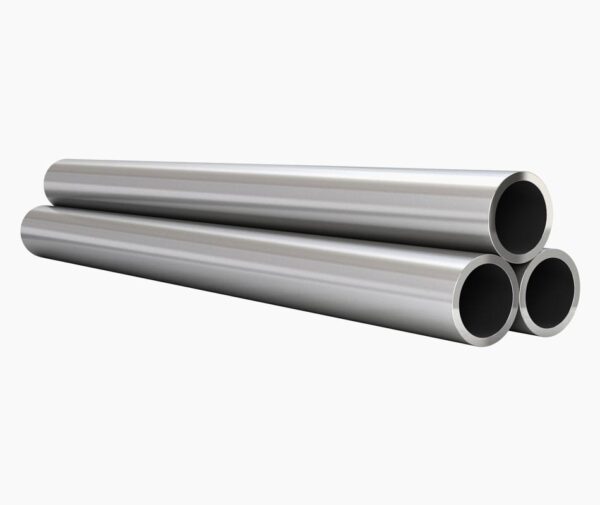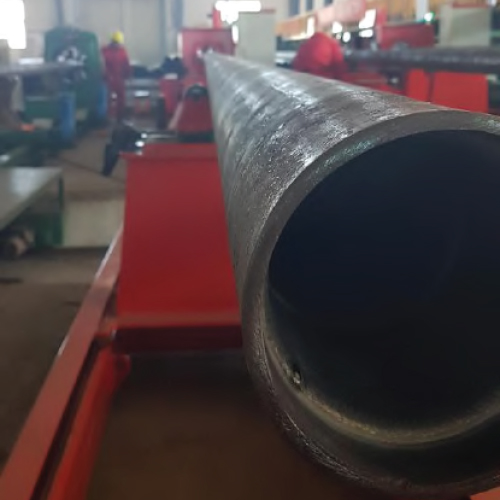
Description
The alloy has a high value of specific heat, which increases with the temperature of the alloy. This can therefore be used to sink heat. It also has an appropriate amount of thermal conductivity.
Under the cryogenic temperature range, the tensile strength increases considerably. Brinell hardness of hot rolled alloy, being 182 at room temperature decreases considerably on increasing the temperature above 400°C, and then becomes constant at about 135.
Impact tests are vital for engineering materials. Even at lower temperatures, the alloy remains tough and the brittleness of the substance is resisted, making the alloy useful for that range. At room temperature, the alloy absorbs 244 Joules. An annealed cold rolled sheet will give a shear strength of 419.2 megapascals and a Rockwell hardness of 71B. Engineering application is often done through cyclic stresses and the fatigue strength of the material therefore becomes crucial. A rotating-beam fatigue test (10^ 8 cycles) conducted on a cold drawn, annealed rod reveals the pattern of its fatigue strength even at elevated temperatures. The fatigue strength remains constant from room temperature to about 340 megapascals at 200°C but decreases to 325 megapascals when the temperature is raised between 320°C to 420°C. Increasing the temperature further, the fatigue strength of the alloy decreases from 310 megapascals at 420°C to about 105 megapascals at 780°C. The microstructure of INCONEL alloy 600 reveals a stable austenitic phase. It also has a solid solution with a few precipitated phases of cyano nitrides and chromium carbides. The microstructural changes in the alloy 600 are not likely to occur at stream generator operating temperatures. If some microstructural changes that are immeasurable do occur, they will not have an adverse effect on the intergranular stress corrosion cracking resistance.
Engineering materials are required in the application of furnaces and heat-treating fields, which need to have resistance to oxidation as well as scaling. On carburizing alloy 600 at 925°C, the weight gain is 2.66 mg/ cm^ 2, whereas on carburizing the alloy INCOLOY, 800HT, and Type 330 Stainless Steel, the weight gain is 4.94 mg/cm^ 2 and 6.42 mg/cm^ 2. This reveals the commendable resistance of alloy 600 to carburization even at high carburising temperatures. With its resistance to sulfur compounds, it also provides resistance to neutral and alkaline salt solutions. Thereby, it is used in caustic environments. The alloy has its products formed under various standards that include ASTM, ASME, SAE, ISO, DIN, etc.
Inconel alloy 600 ASTM standards for Seamless tubing, Welded tubing, Seamless Pipe and Welded pipe is B163, B516, B167, and B517 respectively.
The impact strength of the weld from cryogenic to high temperature ranges between 57- 66 Joules. INCONEL alloy 600 is designated as UNS N06600 and W. Number 2.4816. INCONEL alloy 600 becomes a remarkable material when it comes to the combination of proper toughness, good strength, considerable thermal properties, oxidation and corrosion resistance.
Chemical Properties
CHEMICAL PROPERTIES
| Grade | Ni | C | Cr | Mn | Si | Cu | Fe | S | |
| Inconel 600 | Min. | 72.00 | – | 14.00 | – | – | – | 6.00 | – |
| Max. | – | 0.15 | 17.00 | 1.00 | 0.50 | 34.00 | 10.00 | 0.015 |
Physical Properties
| Density | 8.47 g/cm 3 / 0.306 lb/in 3 |
| Melting Point | 1354 -1413 (°C) / 2470 – 2575 (°F) |
| Specific Heat @ 70°F | 0.106 BTU/lb-°F (32–212°F) 444 J/kg-°K (0–100°C) |
| Thermal Conductivity @ 70°F | 109BTU/hr/ft2/ft/°F15.9W/m-°K |
| Elastic Modulus @ 70ºF (tension) | 31.1 x 10⁶ psi 214 GPa |
| Electrical Resistivity @ 70°F | 620 Microhm-in at 68°F1.03 Microhm-cm at 20°C |
| Poisson’s Ratio | 0.324 – 0.339 |
| Magnetic Permeability | 1.010 @ 200 oersted |
General Data
| Standard | 600 |
| UNS | N06600 |
| WERKSTOFF NR. | 2.4816 |
| EN | NiCr15Fe |
| BS | NA 14 |
| GOST | XH60BT |
| JIS | NCF 600 |
| AFNOR | NC15FE11M |
| OR | ЭИ868 |
Standards Specifications
PIPES & TUBES
| Summary | Standards |
| Standard Specification for Nickel Seamless Pipe and Tube | ASTM B161 |
| Standard Specification for Seamless Nickel and Nickel Alloy Condenser and Heat-Exchanger Tubes | ASTM B163 |
| Standard Specification for Welded Nickel-Chromium-Iron Alloy (UNS N06600, UNS N06603, UNS N06025, and UNS N06045 Tubes | ASTM B516 |
| Standard Specification for Welded Nickel-Chromium-Iron-Alloy (UNS N06600, UNS N06603, UNS N06025, and UNS N06045) Pipe | ASTM B517 |
| Standard Specification for Nickel-Chromium-Iron Alloys (UNS N06600, N06601, N06603, N06690, N06693, N06025, N06045, and N06696)* and Nickel-Chromium-Cobalt-Molybdenum Alloy (UNS N06617) Seamless Pipe and Tube | ASTM B167 |
| Standard Specification for Electric Fusion Welded Nickel and Nickel Alloy Pipe | ASTM B474 |
FITTINGS & FLANGES
| Summary | Standards |
| Standard Specification for Factory-Made Wrought Nickel and Nickel Alloy Fittings | ASTM B366 |
| Standard Specification for Nickel Alloy Forgings | ASTM B564 |
Forms of Supply
Pipe and tubing, fittings and flanges, washers.
Corrosion Resistance
On conducting a cyclic oxidation test at an elevated temperature of 980°C, INCONEL alloy 600 has zero or negligible change in its weight, while other engineering materials like Type 304 Stainless Steel, Type 309 Stainless Steel, INCOLOY alloy 800 HT showed a remarkable drop in their weight. Therefore, the ability of the alloy 600 to retain its protective oxide coating is more prevalent than other materials.
Heat Treatment
Annealing could be done to provide the required softness or ductility, as in steel. A treatment of 1-2 hours is required to alter the grain size of the alloy. The tube as well as a pipe of INCONEL alloy 600, either hot finished or annealed has a tensile strength of about 520 megapascal to 690 megapascal (N/mm^ 2).
Weldability
INCONEL alloy 600 is easily and conventionally weldable. The INCONEL welding electrode 182 is used in shielded metal-arc type welding of the alloy 600. Gas Tungsten-arc and gas metal-arc type welding of alloy 600 can be done by the INCONEL filler metal 82. The alloy can be welded by the submerged arc flux type welding. The alloy 600 weld remains considerably strong under engineering applications.
Machining
The fabrication is usually done with the help of hot-working or cold-working processes. For a cold-drawn bar of INCONEL alloy 600, the tensile strength decreases with elevation in the temperature up to 500 megapascals at 700°C.
The annealed INCONEL alloy 600 passes the Charpy V-notch test by absorbing 209 Joules of energy at an elevated temperature of 760°C.
Applications
It is widely used in applications that require corrosion and high-temperature resistance. It is used in in food and chemical processing industry It is also used in furnace components and nuclear engineering.
Possible Grade and Alternatives
INCONOL 601
| Grade | Ni | C | Cu | Mn | Si | Al | Cr | Fe | S | |
| Inconol 601 | Min. | 58.00 | – | – | – | – | 1.00 | 21.00 | 7.685 | – |
| Max. | 63.00 | 0.10 | 1.00 | 1.00 | 0.50 | 1.70 | 25.00 | – | 0.015 |
ALLOY 625
| Grade | Ni | C | Tl | Mn | Si | Al | Cr | S | P | Nb+ta | Co | Mo | Fe | |
| Inconel 625 | Min. | 58.00 | – | – | – | – | – | 20.00 | – | – | 3.15 | – | 8.00 | – |
| Max. | – | 0.10 | 0.40 | 0.50 | 0.50 | 1.70 | 23.00 | 0.015 | 0.015 | 4.15 | 1.00 | 10.00 | 5.0 |